
Residue and Feed Safety Risks
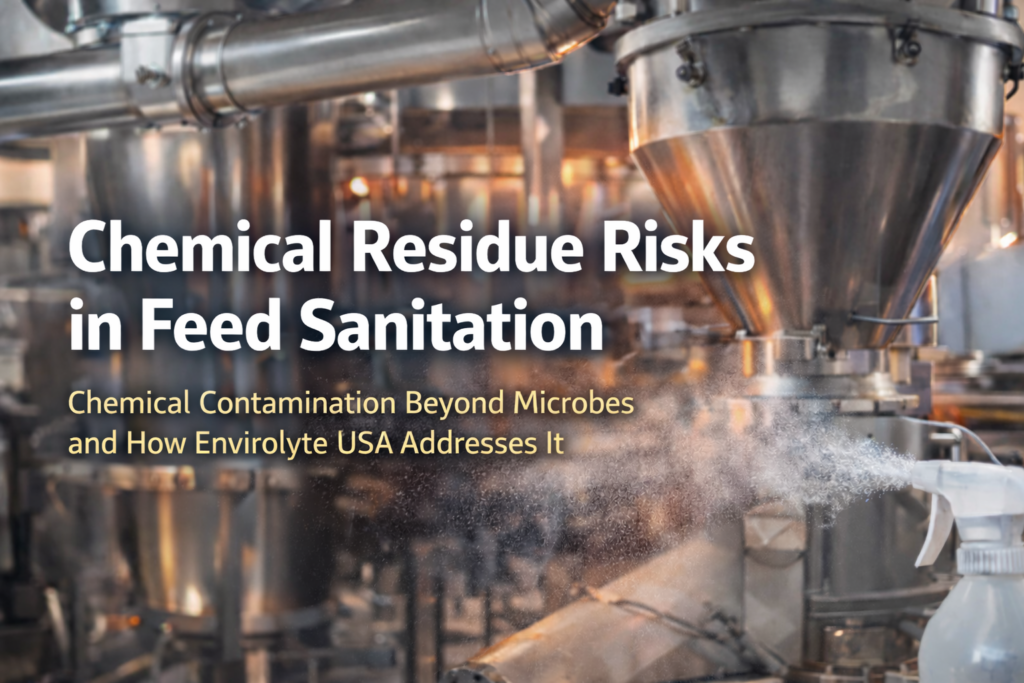
Residue and Feed Safety Risks: Chemical Contamination Beyond Microbes and How Envirolyte USA Addresses It In feed mills and animal food ingredient facilities, sanitation is typically framed around microbial control, Salmonella, Listeria, molds, and other pathogens that threaten feed safety. However, there is a parallel issue that is chemical, not biological: residual sanitizers left on […]
Corrosion in Feed Handling Equipment
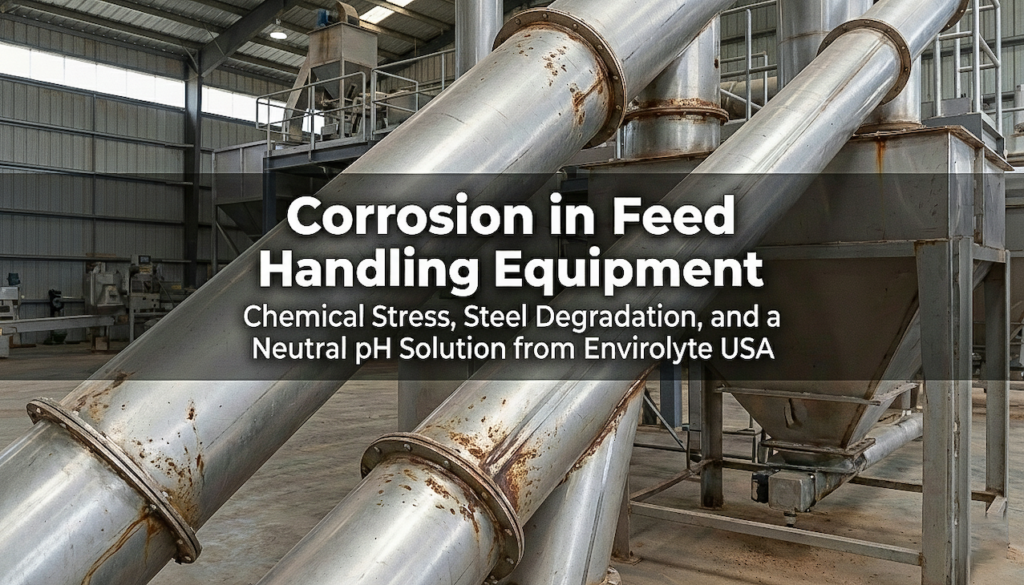
Corrosion in Feed Handling Equipment Chemical Stress, Steel Degradation, and a Neutral pH Solution from Envirolyte USA Stainless steel supports hygienic operations in feed and ingredient processing, but aggressive sanitation chemistry can accelerate localized corrosion and equipment degradation.In animal food ingredient and feed processing environments, stainless steel is the material of choice for conveyors, mixers, […]
Biofilm Persistence in Feed Handling Equipment: Why It Happens and How Envirolyte USA Helps Break the Cycle
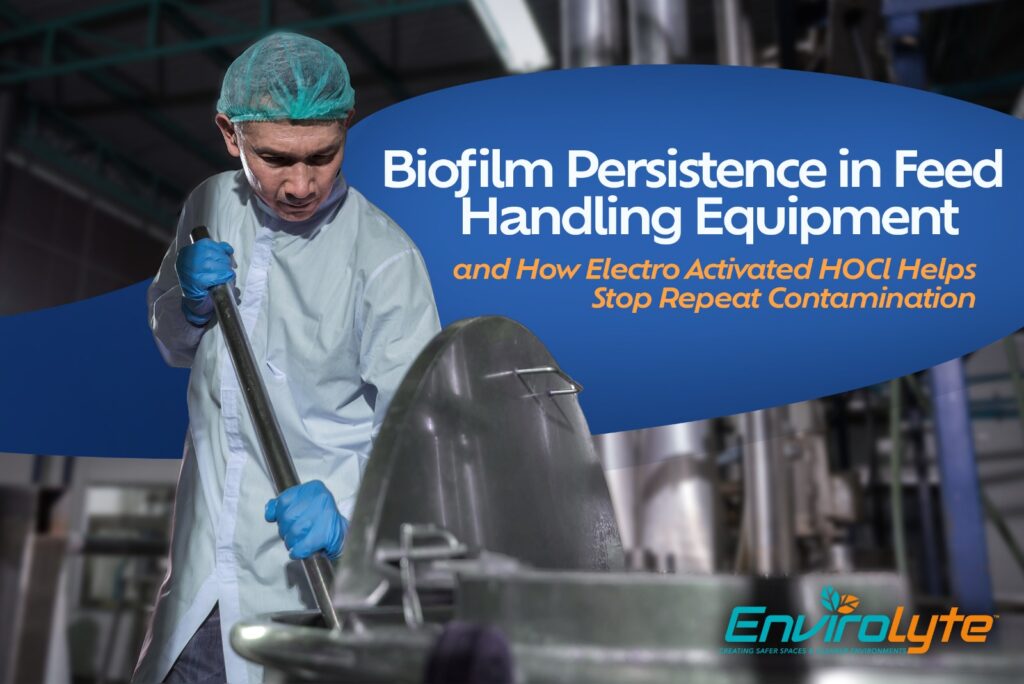
Biofilm Persistence in Feed Handling Equipment: Why It Happens and How Envirolyte USA Helps Break the Cycle Biofilm persistence is one of the most underestimated and costly challenges in animal food ingredient and feed handling operations. Feed mills, premix facilities, and ingredient processors routinely battle Salmonella, molds, and spoilage organisms that reappear weeks or even […]
Why Hospitals Deserve Better Than Harsh Chemicals And Ozone
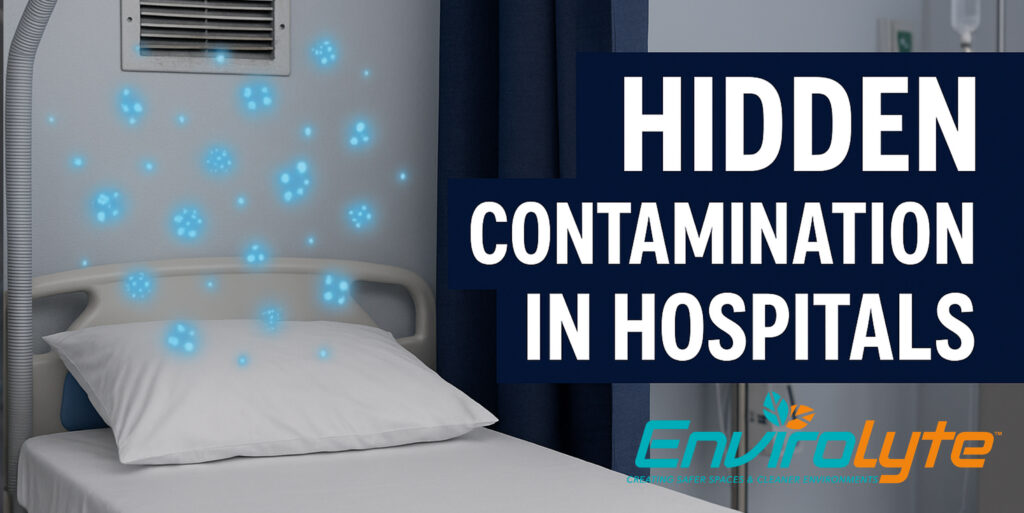
Why Hospitals Deserve Better Than Harsh Chemicals And Ozone Hospitals cannot rely on surface level disinfectants and ozone alone when contamination is hiding in the air, in fabrics, and deep inside the built environment. Every day, hospitals face a complex mix of viruses, bacteria, mold, biofilms, and persistent odor compounds. These contaminants do not stay […]
Cleaner Classrooms

Cleaner Classrooms, Healthier Students: Why HOCl Matters for School Environments School districts across the country are facing rising levels of student illness, persistent odors, and indoor air quality complaints. Classrooms that are full of carpets, lockers, desks, shared materials, and constantly recycled air can trap germs, mold spores, and odor compounds for days at a […]
Odor Control

Odor Control Redefined: Why HOCl Outperforms Ozone and Harsh Chemicals Hypochlorous acid (HOCl) is becoming one of the safest and most effective tools for modern facility odor control. Facilities relying on ozone generators or harsh chemical deodorants often face corrosion, safety concerns, and recurring odor complaints. HOCl neutralizes odor at the molecular level without masking […]
