
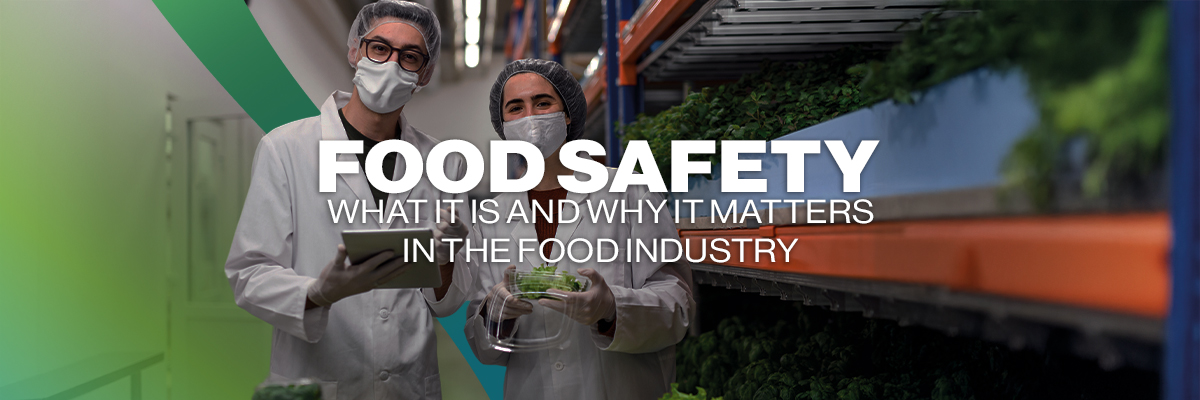
Food Safety: What It Is and Why It Matters in the Food Industry
Introduction
Food safety is the discipline of preventing food from becoming contaminated at any point in production, processing, handling, storage, or distribution. In the food industry, it is not a general concept or a marketing claim. It is an operational requirement that protects consumers, supports regulatory compliance, and preserves trust in the brands that produce and handle food.
Food safety includes practices that help prevent physical, chemical, and biological contamination. These practices include hygienic equipment design, employee hygiene, environmental monitoring, pest control, validated cleaning and sanitation procedures, chemical control, traceability, and corrective action when deviations occur.
In food processing environments, sanitation plays a central role. Surfaces, equipment, drains, tanks, conveyors, tools, and food-contact areas can become reservoirs for microorganisms when cleaning and disinfection are inconsistent.
Food Safety in the United States
In the United States, food safety is shaped by a preventive approach. Instead of focusing only on responding to outbreaks after they happen, modern food safety programs are built around identifying hazards, controlling risk, documenting procedures, and verifying that preventive measures are working.
This approach is reflected in regulatory frameworks such as the FDA Food Safety Modernization Act, commonly known as FSMA, as well as USDA FSIS requirements for meat, poultry, and egg products. Facilities may also operate under programs and standards such as Good Manufacturing Practices, Sanitation Standard Operating Procedures, HACCP, and Preventive Controls.
For companies operating in the U.S. food sector, the central question is not only whether sanitation is being performed. The more important question is whether the sanitation process is controlled, repeatable, documented, and capable of reducing risk consistently.
Why Food Safety Matters So Much in the Food Industry
Food safety matters because failures do not stay isolated inside the plant. A missed sanitation step, an uncontrolled hazard, or inconsistent process documentation can lead to contamination events, recalls, production shutdowns, regulatory action, litigation, and long-term damage to customer confidence.
For food manufacturers, food safety directly affects:
- Protecting public health by reducing the risk of foodborne illness.
- Preventing recalls by minimizing contamination events that can disrupt production and distribution.
- Meeting regulatory expectations by aligning with FDA, USDA FSIS, EPA, and applicable state requirements.
- Building customer trust by demonstrating that food safety is managed as a controlled system.
- Improving operational discipline through repeatable sanitation, monitoring, and verification procedures.
- Supporting sustainability by reducing unnecessary chemical handling, packaging, transport, and waste where appropriate.
Food safety is therefore both a public health responsibility and a business continuity issue. It protects consumers while also protecting the company from preventable operational and reputational damage.
Prevention and Sanitation as Operational Priorities
To achieve consistent results, food companies need to invest in prevention. This includes employee training, validated sanitation procedures, environmental monitoring, documentation, equipment inspection, supplier controls, traceability, and continuous improvement.
Innovative sanitation technologies, including Envirolyte’s on-site generation systems, support this preventive model by producing cleaning and disinfection solutions from water, salt, and electricity directly at the point of use.
This can help facilities improve sanitation consistency while reducing dependence on transported, stored, and handled conventional chemicals. In a food safety program, that matters because every handling step, storage requirement, dilution process, and chemical changeover can add complexity to the operation.
Conclusion
Food safety is more than a regulatory obligation. It is a long-term operational strategy that protects consumers, reduces business risk, strengthens brand credibility, and supports a more responsible food supply chain.
For food processors, the strength of a food safety program depends on prevention, consistency, verification, and the ability to control sanitation risk before it becomes a larger problem.
When sanitation is easier to manage, easier to document, and easier to repeat, food safety becomes more reliable across the operation.
Food safety depends on sanitation you can control, repeat, and verify.
If your facility is working to reduce sanitation variability, chemical handling complexity, or preventable contamination risk, the next step is to evaluate where on-site generated solutions can fit into your food safety program.
