
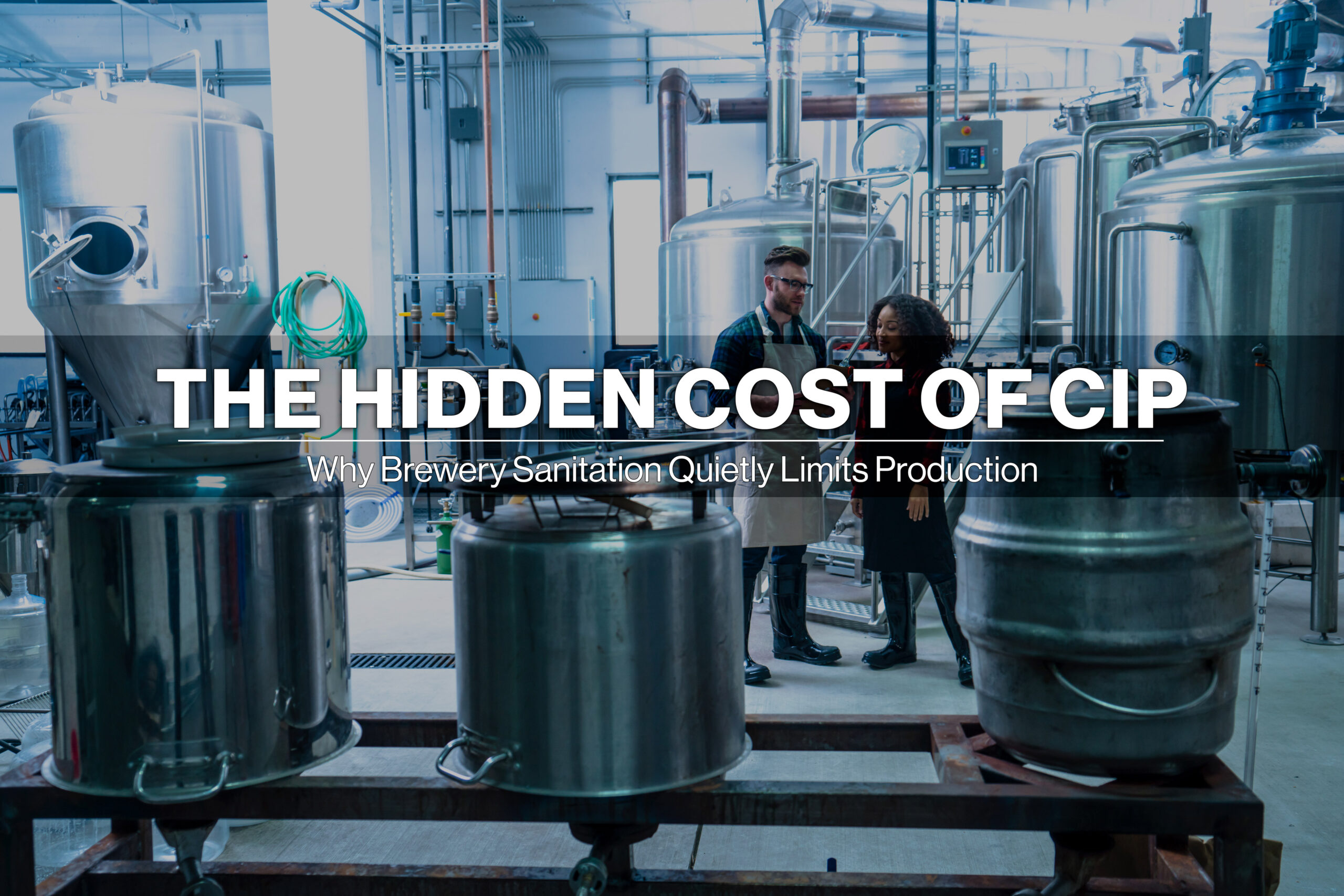
Brewery Sanitation Inefficiencies and the Structural Limits of Modern CIP Optimization
Brewery Sanitation Inefficiencies and the Structural Limits of Modern CIP Optimization If sanitation defines your beer’s quality, why is it still treated as a cleaning task instead of a control system? Brewery Sanitation Is Quietly Controlling Your Capacity If you have ever walked into the cellar expecting a tank to
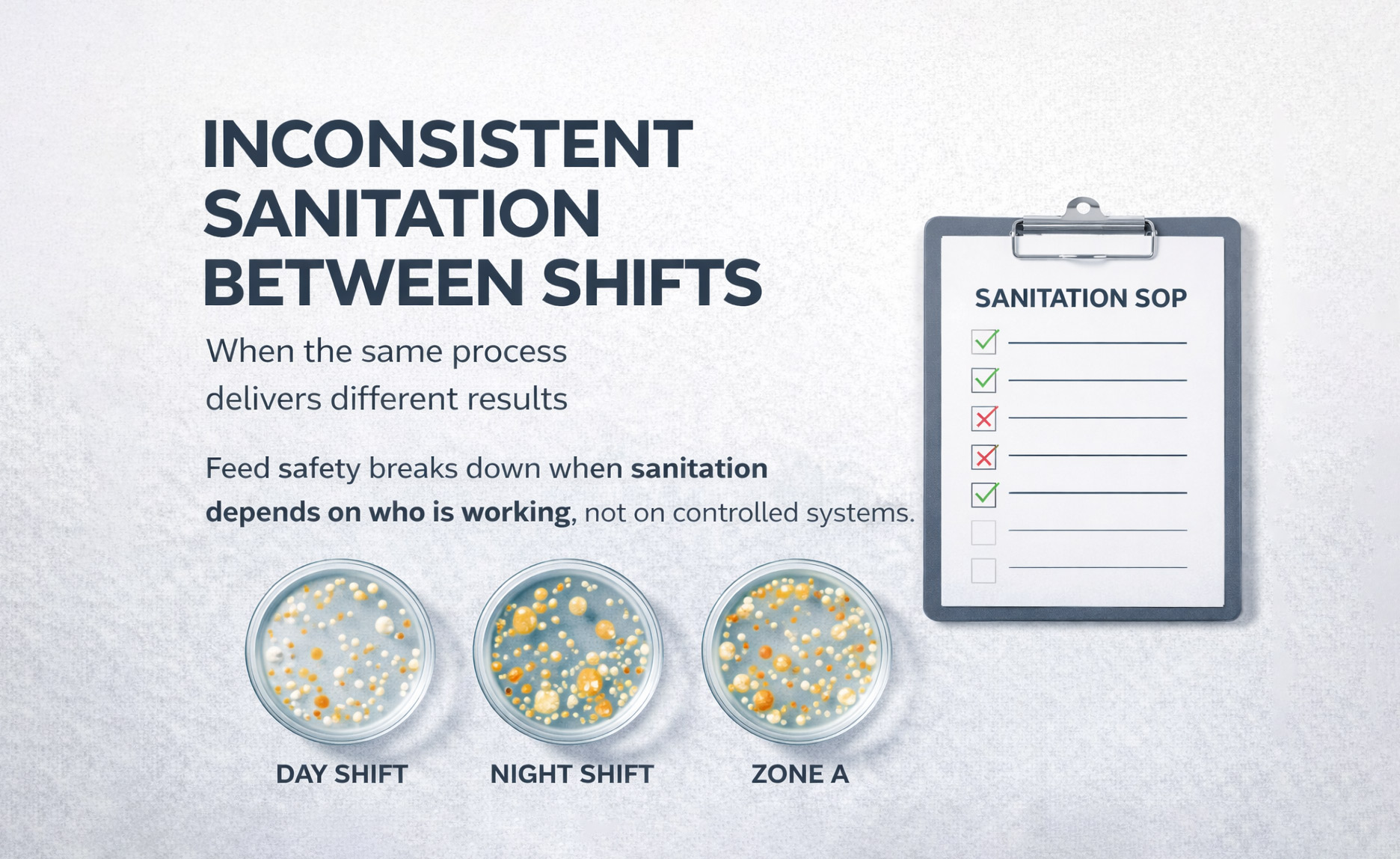
Inconsistent Sanitation Outcomes Between Shifts
Inconsistent Sanitation Outcomes Between Shifts Why Variability Undermines Feed Safety, and How Envirolyte USA Restores Control In animal food ingredient and feed handling facilities, sanitation programs are often well designed on paper, validated chemicals, written SOPs, defined CIP parameters. Yet in practice, sanitation effectiveness frequently varies by operator, by shift,
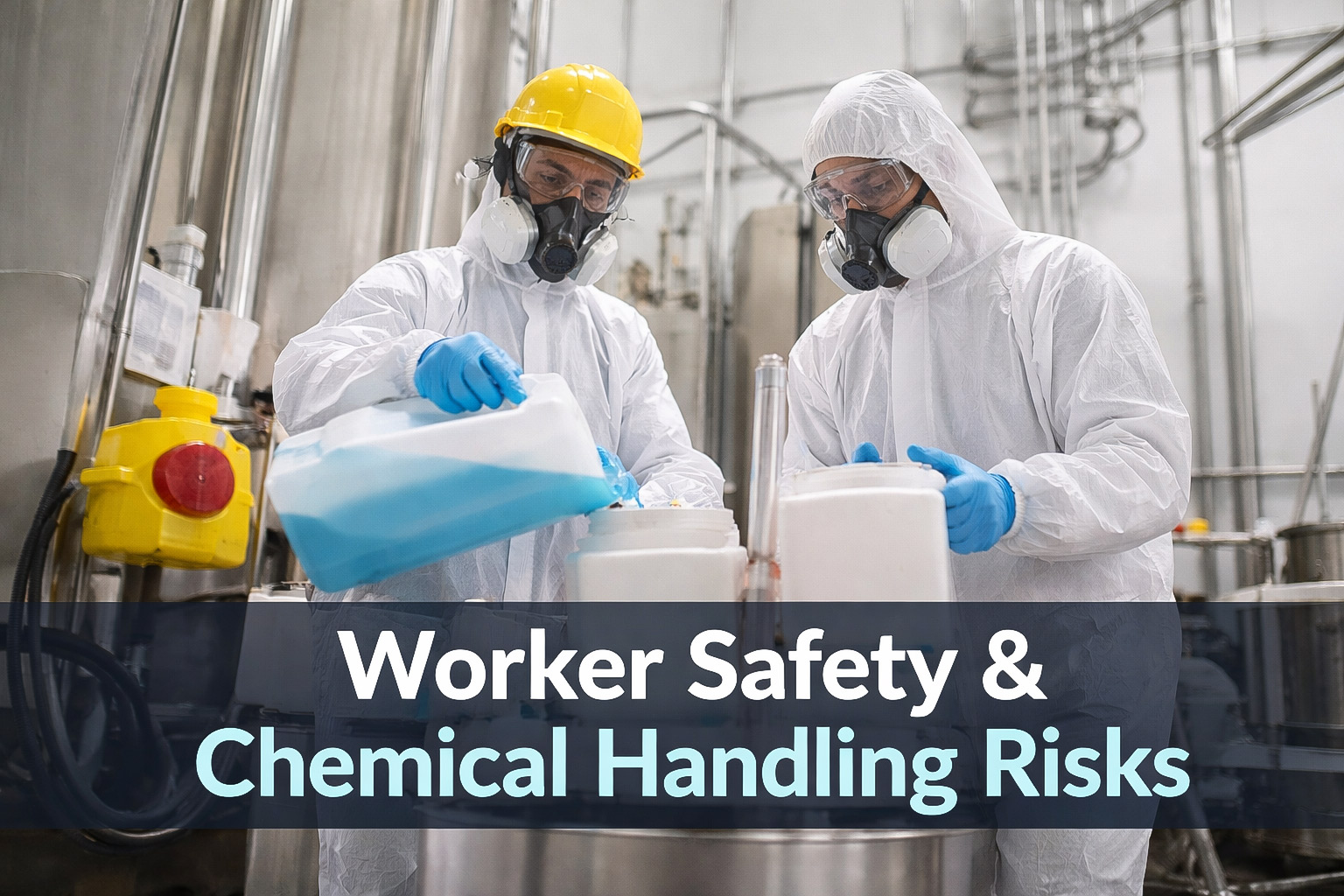
Worker Safety and Chemical Handling Risks in Feed and Ingredient Facilities
Worker Safety and Chemical Handling Risks in Feed and Ingredient Facilities Why Traditional Sanitation Exposes Workers, and How Envirolyte USA Reduces That Risk Sanitation programs in animal food ingredient and feed handling facilities are designed to protect product safety. Yet, in many operations, they do so at the expense of
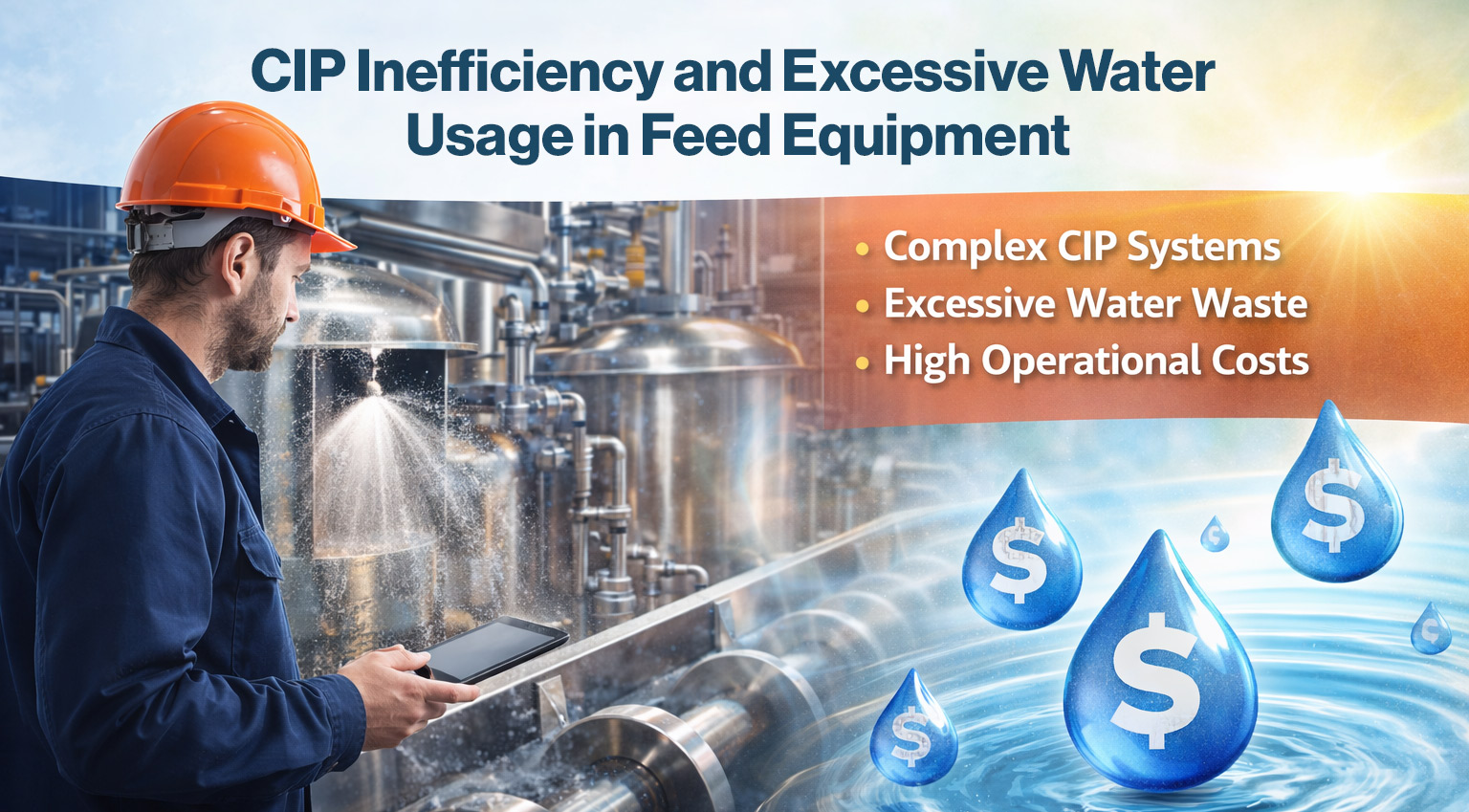
CIP Inefficiency and Excessive Water Usage in Feed Equipment
CIP Inefficiency and Excessive Water Usage in Feed Equipment Why Traditional CIP Programs Over consume Resources, and How Envirolyte USA Simplifies the Process Clean in Place CIP systems are foundational to sanitation in animal food ingredient and feed handling facilities. Conveyors, mixers, augers, tanks, and piping rely on CIP protocols
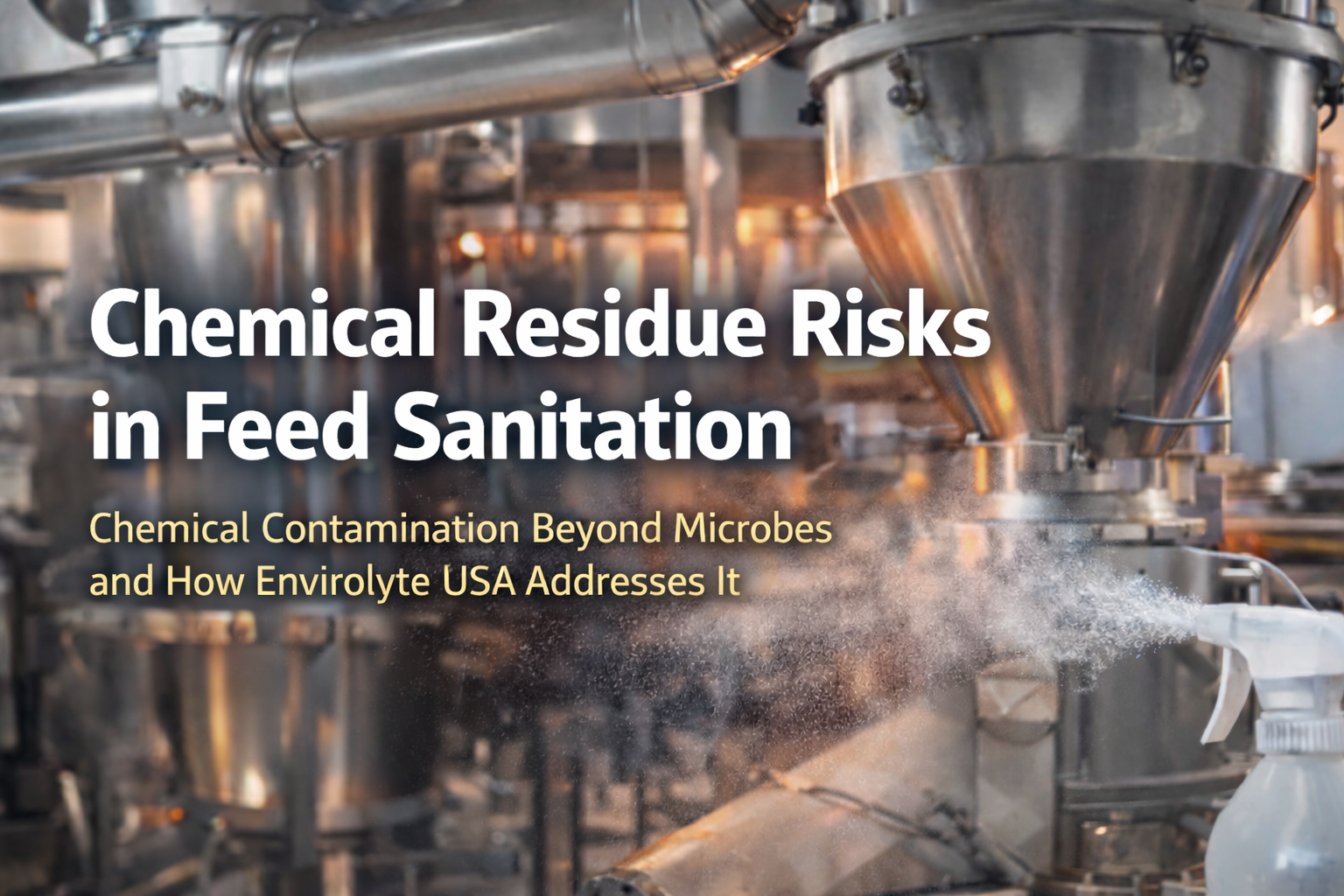
Residue and Feed Safety Risks
Residue and Feed Safety Risks: Chemical Contamination Beyond Microbes and How Envirolyte USA Addresses It In feed mills and animal food ingredient facilities, sanitation is typically framed around microbial control, Salmonella, Listeria, molds, and other pathogens that threaten feed safety. However, there is a parallel issue that is chemical, not
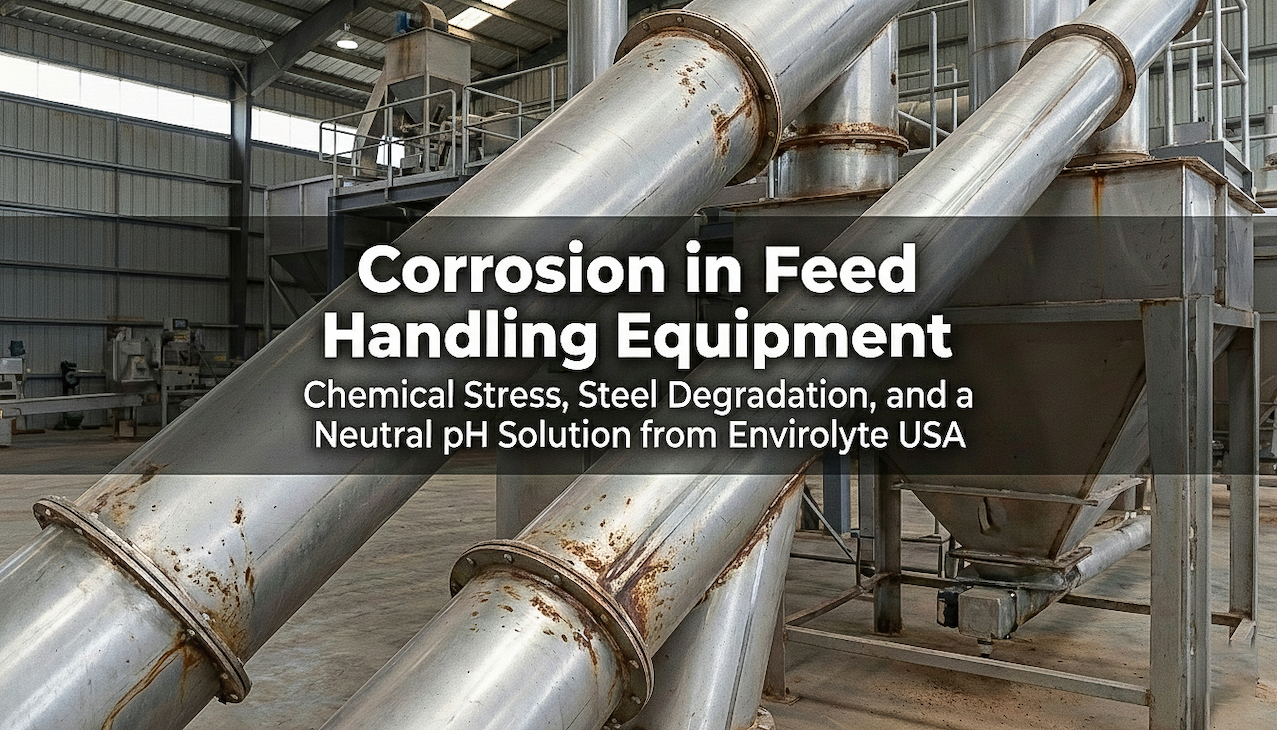
Corrosion in Feed Handling Equipment
Corrosion in Feed Handling Equipment Chemical Stress, Steel Degradation, and a Neutral pH Solution from Envirolyte USA Stainless steel supports hygienic operations in feed and ingredient processing, but aggressive sanitation chemistry can accelerate localized corrosion and equipment degradation.In animal food ingredient and feed processing environments, stainless steel is the material
