
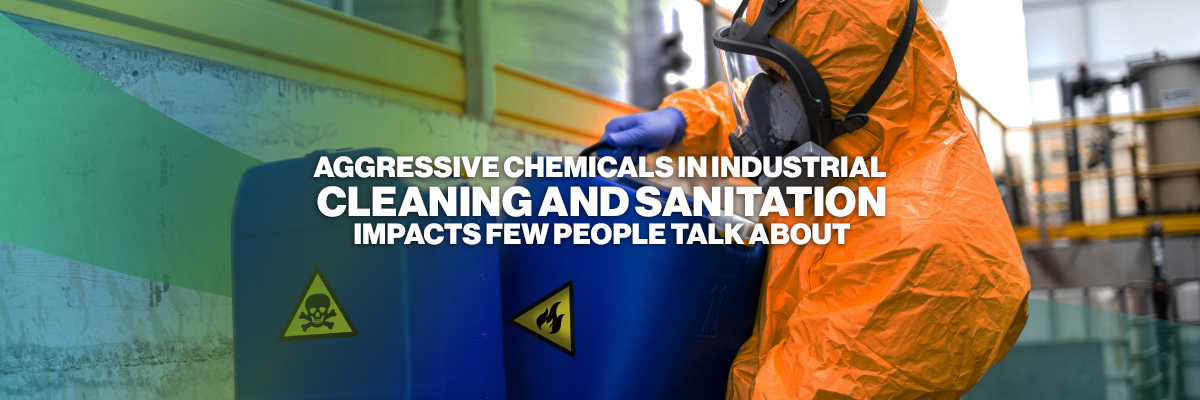
Aggressive Chemicals in Industrial Cleaning and Sanitation: Impacts Few People Talk About
Introduction
Industrial sanitation is a fundamental step in ensuring product quality and consumer safety. However, the excessive use of aggressive chemicals is still a common practice across several sectors, bringing impacts that often go unnoticed for workers, the environment, and even the equipment used.
In this article, we will show why rethinking this model is essential, how to reduce aggressive chemicals in sanitation, and the sustainable alternatives already transforming the reality of many industries.
The Problem with Aggressive Chemicals
Although effective in eliminating microorganisms, substances such as chlorine in high concentrations and other corrosive disinfectants can cause:
- Occupational risks: direct contact can cause burns, skin irritation, and respiratory problems.
- Equipment wear: continuous use reduces the service life of machinery, pipes, and metal surfaces.
- Environmental impact: chemical residues disposed of incorrectly contaminate soil, rivers, and groundwater.
- Residues in food: in poorly conducted processes, there may be a risk of chemical residues exceeding permitted limits, affecting the quality of the final product.
The Need for Balance Between Efficiency and Safety
The pursuit of efficient sanitation cannot ignore employee health, equipment durability, and environmental preservation. That is why more and more companies are adopting sanitation policies that combine microbiological efficacy with reduced use of aggressive products.
Envirolyte Technology: Sustainable for Industrial Sanitation
Envirolyte Brasil positions itself as a strategic partner for industries that want to reduce the impacts of aggressive chemicals without compromising safety. The company offers solutions based on electrolysis that synthesize, from water, salt, and electricity:
- Anolyte: a hypochlorous acid solution that is highly effective and safe for human beings.
This innovative sanitation solution is produced on site, eliminating the need to transport and store hazardous chemicals. In addition, Envirolyte enables:
- Significant reduction in the use of conventional chemicals.
- Greater safety for operating teams.
- Sustainability in water disposal and reuse.
- Savings in equipment and infrastructure maintenance.
Conclusion
The use of aggressive chemicals in industrial sanitation is a topic that needs to be discussed with greater transparency. Companies have much to gain by adopting a safe, effective, and sustainable solution.
Envirolyte Brasil is prepared to help industries across different sectors transform their sanitation processes by combining efficiency, environmental responsibility, and protection for worker health.
Aggressive chemicals should not be the default path to safe industrial sanitation.
If your operation is trying to reduce chemical exposure, protect equipment, and maintain sanitation performance, the next step is to evaluate where conventional chemical dependency can be safely replaced with on-site generated solutions.
