
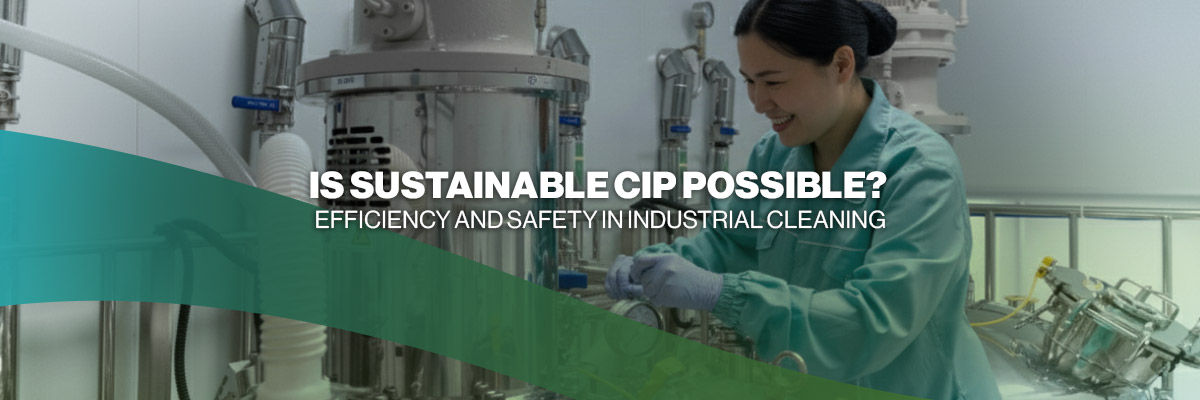
Is Sustainable CIP Possible? Efficiency and Safety in Industrial Cleaning
Introduction
The CIP, or Cleaning in Place, process is an essential part of the cleaning and sanitation routine in the food, beverage, dairy, and pharmaceutical industries. Although effective, the traditional method often requires large volumes of water, energy, and chemicals, which increases costs and creates greater environmental impact.
But this scenario is changing. With new sustainable technologies for industrial sanitation and the adoption of more efficient practices, it is now possible to structure a sustainable CIP, reducing waste, optimizing resources, and preserving the microbiological safety required by regulations.
Below, see how this can be done in practice.
What Does It Mean to Have a Sustainable CIP?
A sustainable CIP maintains sanitary efficiency, meets regulatory standards, and, at the same time, promotes improvements such as:
- Reduced water consumption.
- Reduced use of caustic soda and aggressive detergents.
- Lower generation of chemical effluents.
- Shorter and more economical cycles.
- Lower energy demand.
- Longer service life for pipes, tanks, and valves.
In practice, it means combining operational performance with a clear environmental commitment.
Electrolyzed Water as a Sustainable Alternative in CIP
Electrolysis is one of the most advanced technologies aligned with sustainable CIP. It makes it possible to produce, directly on site:
- Hypochlorous acid (HOCl), a high-performance disinfectant that is safe, stable, and biodegradable, supporting the use of hypochlorous acid in sustainable processes.
- Sodium hydroxide (NaOH), an alkaline solution for heavy-duty cleaning, generated through the same process.
By replacing concentrated chemicals, CIP with electrolyzed water for environmental disinfection delivers practical benefits:
- Significant reduction in the use of traditional chemicals.
- Lower risk and exposure for operators.
- Less toxic effluents that are easier to treat.
- Elimination of the need to transport and store hazardous inputs.
- Microbiological performance equivalent or superior to conventional CIP.
For this reason, electrolysis is gaining ground among companies seeking cleaner and more economical processes, especially through the use of hypochlorous acid in sustainable processes.
Optimizing Cycles to Reduce Water and Energy
In addition to replacing products, certain engineering strategies help make CIP more efficient:
- Recovery of solutions and rinses.
- Reuse of water in non-critical stages.
- Automation with conductivity, turbidity, and temperature sensors.
- Reduction of cycle time through precise monitoring.
- Temperature adjustments to avoid unnecessary heating.
These practices help reduce waste while also generating immediate operational savings.
Microbiological Safety Remains the Priority
Every sustainability action must maintain the safety level required by the industry. This includes:
- Effective elimination of biofilms.
- Assurance of strict sanitary standards for food, beverages, and sensitive products.
Technologies such as HOCl and automated CIP systems help maintain, and often improve, this level of safety without depending on large volumes of chemicals.
Benefits of Implementing a Sustainable CIP
Adopting a sustainable CIP generates immediate results in industrial routines:
- Lower operating costs for chemicals, water, energy, and disposal.
- Reduced environmental impact and alignment with ESG goals.
- Greater safety for operators.
- Longer equipment durability.
- Faster disinfection processes with less interference in production.
Here, sustainability stops being a concept and becomes concrete efficiency.
Conclusion
Yes, it is possible, and increasingly strategic, to implement a sustainable CIP. With resources such as electrolyzed water, automation, and cycle optimization, industries of all sizes can combine sanitary performance, resource savings, and environmental responsibility.
This is the path toward safer, more competitive, and more eco-efficient operations.
Your CIP process should protect sanitation standards while reducing water, chemical, and energy waste.
Every rinse, chemical cycle, heating step, and effluent stream affects the real cost and sustainability profile of industrial cleaning. See how on-site generated cleaning and disinfection solutions can help simplify CIP while maintaining microbiological control.
