
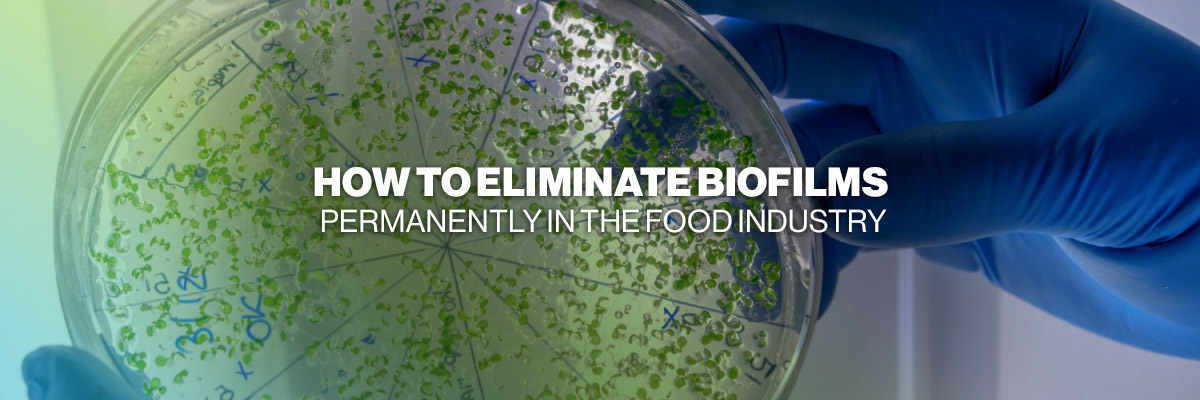
How to Eliminate Biofilms Permanently in the Food Industry
Introduction
In the food industry, few threats are as persistent and dangerous as biofilms. Formed by microbial communities attached to surfaces and surrounded by a protective matrix, they resist traditional cleaning and sanitation, compromise product safety, and create significant sanitary and financial risks.
Even with strict protocols, many pieces of equipment continue accumulating microorganisms and organic matter over time. This happens because biofilms have high tolerance to detergents, conventional disinfectants, and temperature variations, in addition to creating a physical barrier that makes it difficult for chemical solutions to reach them.
In recent years, however, more advanced technologies and precise methods have allowed the industry to eliminate biofilms permanently, increasing operational safety and reducing losses.
What Makes Biofilms So Difficult to Eliminate?
Biofilms have specific characteristics that make their removal a constant challenge. Understanding this dynamic is essential for structuring truly effective processes.
- The extracellular matrix prevents disinfectants from reaching all layers.
- Microorganisms organize themselves across multiple levels, including hard-to-reach regions.
- They can regenerate quickly when they are not completely removed.
- Adhesion is greater on surfaces where there are cleaning failures or accumulated residues.
Cleaning and Sanitation: Why Start with the Correct Step?
The permanent elimination of biofilms begins with cleaning. This process is fundamental to ensuring hygiene in food production, preventing contamination, and maintaining high sanitary standards. Before the disinfection stage, it is essential to ensure:
- Total removal of proteins, fats, and soils.
- Correct use of alkaline detergents.
- Adequate contact time.
- Mechanical friction when necessary.
- Standardization of CIP routines.
When cleaning is not efficient, the disinfectant does not reach all layers of the biofilm, favoring the return of contamination.
Modern Technologies That Make It Possible to Eliminate Biofilms Completely
Electrolyzed Water (HOCl and NaOH)
Electrolysis technology, such as the technology used by Envirolyte, generates two complementary solutions that are fundamental in the fight against biofilms:
Hypochlorous acid (HOCl), responsible for fast, safe, and effective disinfection against bacteria, viruses, and fungi.
Sodium hydroxide (NaOH), indicated for heavy-duty cleaning and the removal of organic residues, fats, and proteins.
The key difference is that these solutions are produced in situ, ensuring ideal concentration, freshness, stability, and reduced operating costs. This approach represents a sustainable technology for sanitation, reducing dependence on aggressive chemicals and optimizing microbiological efficiency.
Real-Time Microbiological Monitoring Systems
Modern equipment detects biofilm formation early, allowing interventions before contamination advances.
Continuous Sanitation Protocols
Alternating cycles of alkaline detergency and disinfection with HOCl reduces the chance of recolonization and keeps surfaces protected.
How to Create a Definitive Protocol to Eliminate Biofilms
To understand how to prevent biofilm in food equipment and achieve consistent results, the industry should adopt practices such as:
- Optimized CIP with alkaline detergency followed by disinfection with HOCl.
- Rigorous standardization of time, temperature, and concentration.
- Adequate training for the teams responsible for cleaning.
- Periodic microbiological monitoring to prevent recurrence.
- Use of sustainable technologies that replace aggressive products.
When properly integrated, these steps transform biofilm control into a preventive and definitive strategy.
Benefits of Eliminating Biofilms Permanently
Eliminating biofilms permanently brings direct benefits to the operation. The reduction of cross-contamination is one of the main advantages, since clean and stable surfaces decrease the movement of microorganisms between equipment. This contributes to increased food shelf life, improves performance in audits and certifications, and reduces operational losses caused by cleaning failures.
Biofilm elimination also reduces rework, prevents unscheduled downtime, and strengthens safety for both operators and consumers. In addition, more efficient processes make better use of water, energy, and chemical inputs, making the operation more sustainable.
Why Technologies Like Envirolyte Help Eliminate Biofilms for Good
Technologies like Envirolyte help eliminate biofilms permanently because they allow local production of hypochlorous acid and sodium hydroxide, ensuring solutions that are always fresh and stable. This reduces chemical residues, eliminates the need to store hazardous substances, and ensures standardized disinfection across all stages.
The continuous use of these solutions improves long-term cost-effectiveness and expands microbiological safety in production, making biofilm control more efficient, sustainable, and reliable for the entire production chain.
Recurring biofilm problems require more than another sanitation cycle.
When biofilms return after cleaning, the issue is usually not effort. It is process design, chemistry, contact time, and consistency. Envirolyte helps food operations generate fresh HOCl and NaOH on site, supporting a cleaner, safer, and more repeatable approach to biofilm control.
