
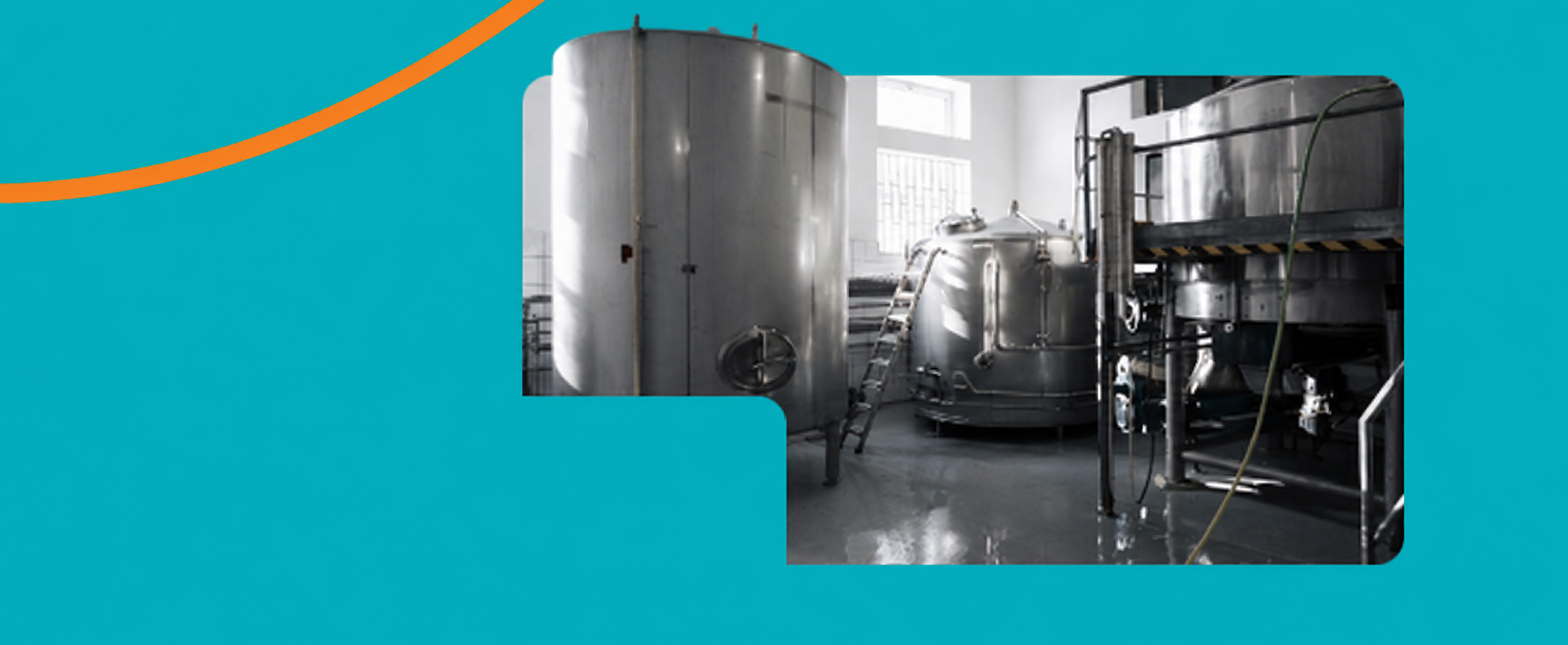
Cleaning Fermentation Tanks: Common Mistakes That Affect Quality
Introduction
In fermentation processes, final product quality does not depend only on formulation, raw materials, or fermentation control. The sanitary condition of the fermentation tanks directly influences microbiological stability, standardization, and production yield.
When cleaning fails, residual microorganisms can stay attached to the inner surfaces of the equipment, encouraging recurring contamination, biofilm formation, and loss of operational predictability.
The problem is that many of these failures are not immediately visible. In many cases, the effects only appear later, as sensory changes, reduced shelf life, microbiological deviations, or discarded batches.
That is why understanding the most common mistakes in fermentation tank cleaning is essential to protecting process quality and reducing operational risk.
Why Fermenter Cleaning Is So Critical
Fermentation tanks operate under conditions that strongly favor microbial growth. The presence of nutrients, moisture, controlled temperature, and organic residue creates an environment where microorganisms can attach and multiply.
In addition, many inner surfaces have areas that are hard to inspect visually, which makes the effectiveness of CIP (Cleaning in Place) systems even more important.
Studies published in Food and Bioproducts Processing show that yeast deposits and fermentation residues can remain attached to surfaces even after rinse steps, requiring suitable flow, temperature, and chemical action for efficient removal.
Mistake 1: Relying Only on How Clean It Looks
One of the most common mistakes is considering a tank clean just because no residue is visible.
The absence of visible soil does not guarantee microbiological removal. Biofilms can remain attached to stainless steel even when the surface looks completely clean.
Research published in the International Journal of Food Microbiology has shown that conventional CIP cycles do not always fully remove bacteria attached to stainless steel surfaces once biofilms have formed.
For this reason, microbiological validation and periodic monitoring are essential to confirm that cleaning works.
Mistake 2: Underestimating Biofilm Formation
Biofilms are among the biggest sanitary challenges in the fermentation industry. Understanding how to prevent biofilm on food equipment has therefore become a priority for companies that want more microbiological predictability and fewer recurring contaminations.
These structures are made up of microbial communities protected by an extracellular matrix that significantly increases their resistance to sanitizers.
A study published in the International Dairy Journal notes that multi-species biofilms show high tolerance to conventional cleaning processes, making microbiological control more complex and increasing the risk of persistent contamination.
When biofilms are not properly removed, they become a continuous source of contamination inside the operation.
Mistake 3: Using CIP Parameters Without Periodic Validation
Many operations keep the same cleaning cycles for years without reviewing their effectiveness.
Changes in raw materials, recipes, fermentation temperatures, and production volume can change the profile of fouling and residue in the tanks.
Researchers at the Technical University of Denmark showed that the historical analysis of CIP cycles makes it possible to spot operational deviations and significantly improve industrial cleaning results.
Without continuous monitoring and validation, the process can lose efficiency gradually without the team noticing.
Mistake 4: Neglecting Critical Points in the Tank
Not every area of a fermenter behaves the same way during cleaning. Connections, valves, sensors, gaskets, and low-turbulence regions tend to carry the highest risk of residue buildup.
Some areas of the equipment are much harder to clean and need their own verification methods. Ignoring these points raises the risk of recurring contamination and microbiological failures.
The Direct Impact on Product Quality
When cleaning loses efficiency, the effects do not stay inside the tank.
The operation starts to deal with greater microbiological variability, cross-contamination risk, sensory changes, and shorter product shelf life.
In addition, recurring failures increase the use of water, chemicals, and energy because of rework and extra cleaning cycles.
The result shows up as lost productivity, discarded batches, higher operating costs, and less predictable processes.
How to Improve Fermenter Cleaning Efficiency
Reducing these risks depends on an approach built on control and standardization.
The main measures include:
- Periodic validation of CIP cycles.
- Continuous microbiological monitoring.
- Inspection of critical areas and hard-to-reach points.
- Strict control of temperature, concentration, and contact time.
- Periodic review of cleaning protocols.
- Use of technologies that increase the stability and predictability of sanitation.
Solutions based on on-site sanitizer generation allow greater operational control, reducing concentration variation and increasing the consistency of cleaning processes. Among them, the electrolyzed water solution for disinfection stands out, enabling local generation of hypochlorous acid-based sanitizers, which contributes to greater microbiological stability and less dependence on conventional chemicals.
Conclusion
Fermentation tank cleaning directly influences quality, microbiological stability, and operational efficiency. By treating this step as a strategic part of the operation, industry reduces risk, improves the predictability of results, and strengthens final product quality.
In this context, Envirolyte supports industries with technologies aimed at continuous microbiological control. Through an electrolyzed water solution for disinfection, the company enables on-site generation of hypochlorous acid-based sanitizers, contributing to safer, more standardized, and more sustainable processes.
In addition to helping control recurring contamination, the technology helps companies that want to understand how to prevent biofilm on food equipment, reducing the formation of microbiological reservoirs and increasing the efficiency of cleaning and sanitation protocols throughout the operation.
Clean tanks protect every batch.
See how generating disinfection solutions on-site can bring more consistency to tank cleaning and lower the risk of recurring contamination.
