
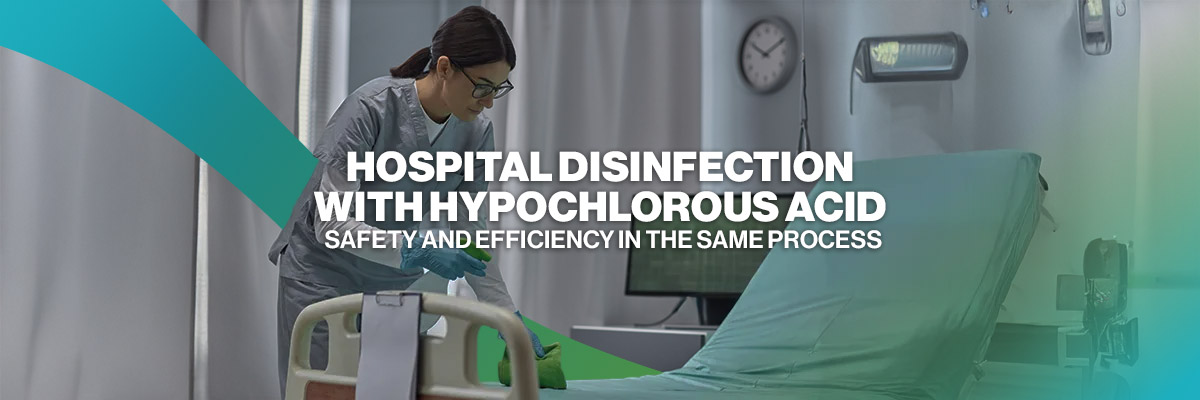
Hospital Disinfection with Hypochlorous Acid: Safety and Efficiency in the Same Process
Introduction
Hospital environments require the highest level of microbiological control. The constant presence of pathogenic microorganisms, combined with patient vulnerability, makes it essential to use disinfection agents that combine efficacy and safety.
In this scenario, hypochlorous acid (HOCl), generated through the electrolysis of water, salt, and electricity, has stood out as a technological solution that combines strong disinfection performance and occupational safety, without the negative impacts of traditional chemical products.
Below, see how this technology is modernizing hospital cleaning and hygiene routines, reducing chemical risks, and increasing the level of hospital biosafety in healthcare institutions.
Why Rethink Hospital Disinfectants
The importance of hospital disinfection goes beyond visible cleaning: it is a decisive factor in preventing infections and ensuring safe environments. Products such as quaternary ammonium compounds, alcohol, and sodium hypochlorite are still widely used, but they present known limitations:
- High toxicity and risk of respiratory or skin irritation.
- Chemical residues that damage surfaces and equipment.
- Strong odor and volatility, which compromise comfort in the hospital environment.
- Reduced efficacy after dilution and prolonged storage.
These factors have led the sector to seek safer and more sustainable alternatives that maintain the same level of microbiological performance without harming the health of professionals or the environment.
Hypochlorous Acid: The New Generation of Hospital Disinfection
Hypochlorous acid is a natural oxidant produced by the human immune system itself to fight pathogens. When generated through electrolysis, it acts by disrupting the cell wall of viruses, bacteria, and fungi within seconds, offering a safe and effective alternative for microorganism control in healthcare environments.
Key technical advantages:
- Proven action against microorganisms such as Staphylococcus aureus, Escherichia coli, and Pseudomonas aeruginosa.
- Compatibility with sensitive surfaces, including stainless steel, polymers, and fabrics.
- Neutral pH, helping prevent corrosion and stains.
- No toxic residues or hazardous byproducts.
- Chemical safety, reducing the need for heavy PPE.
Practical Applications in Healthcare Environments
The versatility of hypochlorous acid allows it to be used across multiple stages of the hospital hygiene process, such as:
- Disinfection of critical surfaces, such as beds, surgical tables, and countertops.
- Cleaning of medical equipment and instruments.
- Nebulization and spraying in ICUs and isolation rooms.
- Hand and fabric hygiene, without causing irritation.
Hospitals that already use the technology report lower operating costs and greater occupational safety, due to the elimination of aggressive chemical compounds and the simplification of the solution preparation process.
Sustainability and Regulatory Compliance
In addition to being biodegradable, hypochlorous acid meets the requirements of agencies such as ANVISA, EPA, and FDA, reinforcing its safety for use in hospital environments.
When generated on site with Envirolyte equipment, the transportation and storage of hazardous products are eliminated, reducing logistical risks and contributing to a more sustainable and economical operation.
Conclusion
Hospital disinfection with hypochlorous acid represents a technical and environmental leap in microbiological control.
More than a simple disinfectant, it is an intelligent and safe solution that optimizes processes, protects professionals and patients, and reinforces healthcare institutions’ commitment to sustainability and innovation.
Hospital disinfection should protect patients and staff without adding chemical risk to the routine.
If your facility is still relying on harsh disinfectants that create odor, residue, handling risk, or surface compatibility concerns, it may be time to evaluate a safer sanitation model. Envirolyte helps healthcare operations generate effective hypochlorous acid on site, reducing dependency on traditional chemical storage, transport, and preparation.
